
Imagine yourself in a sterile, quiet room. The air hums with the low thrum of fluorescent lights. Across from you, a doctor clears their throat, their expression unreadable. They slide a folder across the desk. “We have your results,” they say.
In that moment, your mind becomes a battlefield. One part, a panicked creature of pure instinct, screams to run. It wants to snatch the folder, throw it in the nearest incinerator, and flee to a world of ice cream and denial. If I don’t know, it reasons, it can’t hurt me.
But another part of you, a quieter, more resolute voice, holds you in place. It understands that what’s in the folder is real, whether you look at it or not. This voice knows that knowledge, however painful, is the first step toward action.
This internal conflict isn’t just about medical results. It’s a fundamental dilemma of the human condition, a question we confront daily in a thousand different ways: Is ignorance truly bliss, or is knowledge the ultimate power?
This question is not just philosophical—it shapes our daily choices, our relationships, and even our collective future. To answer it, we must look at history, psychology, and the realities of modern life.
The Ancient Roots of a Modern Problem
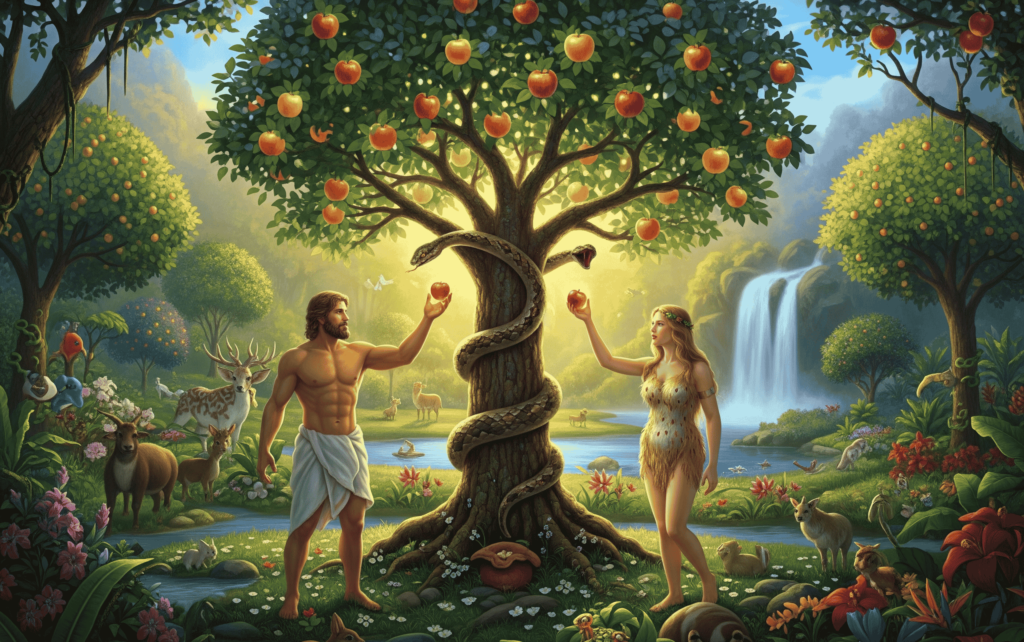
This isn’t a new struggle; our oldest stories are built around this very question. Our foundational myths and philosophies are shot through with this conflict. The story of Adam and Eve is a classic example: they existed in a state of perfect, blissful ignorance in the Garden of Eden. Their choice to eat from the Tree of Knowledge of Good and Evil was a choice for awareness over comfort, and it came with a heavy price: anxiety, shame, and eviction from paradise. It was the first, and perhaps most famous, trade of bliss for knowledge.
The Greek philosopher Plato built his entire philosophy around this dilemma with his Allegory of the Cave. He imagined prisoners chained in a dark cave, who have spent their entire lives watching shadows flicker across a stone wall. They believe these shadows are the whole of reality because they’ve never known anything else. For Plato, the philosopher is the one who breaks free from the chains, endures the painful, blinding light of the sun outside the cave, and finally sees the world as it truly is. The journey is agonizing, but the reward is truth. Plato’s conclusion was unequivocal: the pursuit of truth, no matter how difficult, is our highest and most noble duty.
For centuries, the answer seemed to lean in Plato’s favor. Knowledge was scarce, hard-won, and essential for progress. But today, we face a new challenge. We have escaped the cave, only to find ourselves in a blinding blizzard of information.
The Psychology of Willful Blindness
Why is ignorance so alluring? It’s not just a philosophical preference; it’s deeply rooted in our psychology. Our brains are fundamentally wired to protect us from mental and emotional discomfort, a phenomenon psychologists call cognitive dissonance. This is the state of mental stress we experience when we hold two conflicting beliefs, or when we are presented with new information that contradicts our existing values and ideas. For example, a person who smokes while believing smoking is unhealthy lives in a state of cognitive dissonance. To resolve this uncomfortable friction, they might either quit smoking (the harder path) or downplay the health risks (the easier path of willful ignorance).
This is amplified by our brain’s natural confirmation bias, a mental shortcut where we instinctively seek out, interpret, and remember information that confirms what we already believe. It’s a subconscious filtering mechanism. In a world of endless information streams and personalized algorithms, it’s easier than ever to construct a comfortable “filter bubble” or “echo chamber” of validating opinions. We don’t just accidentally stumble into Plato’s cave anymore; we actively decorate it, choosing the shadows that make us feel the most secure. This curated ignorance feels safe, but it comes at the cost of a complete and accurate picture of reality.
In daily life, this means we may avoid news that challenges our worldview, ignore feedback that makes us uncomfortable, or surround ourselves with people who only reinforce our beliefs. While this can protect our self-esteem and reduce anxiety in the short term, it can also limit our growth and blind us to important truths.
In Defense of Bliss
Let’s be honest: the “ignorance is bliss” argument has its merits. Choosing to ignore certain realities can be a powerful tool for preserving mental well-being, especially in a world that bombards us with negativity and stress.
- Anxiety Reduction: Constantly dwelling on global crises, political turmoil, or the myriad of dangers in the world can lead to a state of perpetual anxiety and helplessness. Ignorance, in this context, acts as a shield, allowing us to focus on what we can control and maintain our mental health.
- The Joy of the Moment: A child on a playground is a picture of pure presence. They are not contemplating the geopolitical implications of their playtime or the structural integrity of the slide. They are simply being. A degree of ignorance is essential for experiencing simple, unadulterated joy.
- Focus and Productivity: You cannot focus on everything at once. To achieve anything meaningful, you must strategically ignore a vast amount of information. A scientist working on a breakthrough must ignore office politics; an artist must tune out the noise of the market to create. Selective ignorance can be a superpower for deep work and creativity.
The Power of Painful Truths
And yet, a life of deliberate ignorance is a life lived on borrowed time. The arguments for facing reality, however harsh, are compelling.
- Agency and Control: You cannot fix a problem you refuse to acknowledge. The scary medical diagnosis is the first step to a treatment plan. Acknowledging a failing relationship is the only way to begin mending it. Knowledge, even when it’s terrifying, transforms you from a passive victim into an active agent in your own life. It empowers you to make informed decisions and take meaningful action.
- Growth and Resilience: Pain is the crucible of growth. We learn from our mistakes, and mistakes are painful. We become more resilient by facing and overcoming challenges, not by pretending they don’t exist. To hide from painful truths is to stagnate. Every breakthrough, whether personal or societal, begins with confronting uncomfortable realities.
- Authenticity: A life built on illusion is inauthentic. To live a genuine life is to have the courage to see the world as it is, not just as you wish it to be. It’s about choosing the red pill, as in The Matrix, and embracing the “desert of the real” over a comfortable, simulated lie. Authenticity brings depth and meaning to our experiences, even when they are difficult.
The Modern Deluge: From Information Scarcity to Overload
The central challenge of our time is that we no longer live in Plato’s cave of information scarcity. Instead, we are caught in a hurricane of information overload. Our screens are firehoses blasting us with every possible horror, outrage, and anxiety from around the globe, 24/7. This is a historically new phenomenon. For 99.9% of human history, the information you received was local, relevant, and, for the most part, actionable. Your world was your village; your problems were tangible and within reach.
Today, our “village” is the entire planet. We are made aware of injustices we cannot correct, tragedies we cannot prevent, and complexities we cannot possibly comprehend. In this environment, trying to be a pure “Reality Navigator”—to absorb and process every piece of incoming information—is a recipe for mental and emotional paralysis. The sheer volume of problems can be crushing, leading to a state of “empathy fatigue” where we become desensitized to the very issues we care about. The light of knowledge is no longer just illuminating; it’s a blinding, disorienting strobe light that can leave us feeling powerless and overwhelmed.
This new reality demands a new approach—one that balances awareness with self-preservation.
The Art of Strategic Ignorance: Becoming the Wise Filter
So, what is the answer? The solution is not to choose between the Ostrich and the Navigator, but to integrate them. The goal is not blissful ignorance or painful awareness, but selective, strategic ignorance—a conscious, empowered approach to information.
This isn’t a passive act of hiding, but an active, conscious choice. It’s about building an “information diet” as carefully as you would a nutritional one, filtering out the noise while nourishing your mind with what truly matters.
Here are some practical steps:
- Identify Your Circle of Control: Actively seek knowledge about the things you can influence: your health, your relationships, your community, your work. This is where knowledge is power and action is possible.
- Consciously Curate Your Inflow: Be ruthless about what you allow into your consciousness. Does this piece of information help you live a better life or contribute to the well-being of others? Or does it only serve to generate outrage and anxiety? It’s okay to turn off the news. It’s okay to mute the endless scroll. Protect your attention as you would your most valuable asset.
- Embrace Actionable Knowledge: Focus your attention on learning things that empower you to act. Instead of just reading about a problem, seek out information on potential solutions and how you can contribute, no matter how small. Let your curiosity be guided by purpose, not by fear.
Ultimately, the wisdom of the modern age is learning to distinguish between the dragons you must fight and the shadows you must learn to ignore. It’s about having the courage to face the truths that matter, the humility to accept what you cannot change, and the wisdom to grant yourself the bliss of ignoring the rest.

Happy is a Machine Learning Engineer whose academic journey spans a Ph.D. from IIT Kharagpur and postdoctoral research in France. While his professional work focuses on building intelligent systems, his deeper interest lies in philosophy and the timeless question of how to live well. Engaging with ideas from ethics, psychology, and human experience, he explores what a meaningful, balanced, and flourishing life might look like in an age shaped by technology.
This blog favors deep reflection over rote knowledge, emphasizing wisdom over quick fixes. Primarily LLM-crafted yet meticulously curated, it aligns with human thriving and mindful living. Dive in for revelations, spark your wonder, and ponder your path amid today's trials and age-old truths.